Enabling faster laboratory insights in a time of need
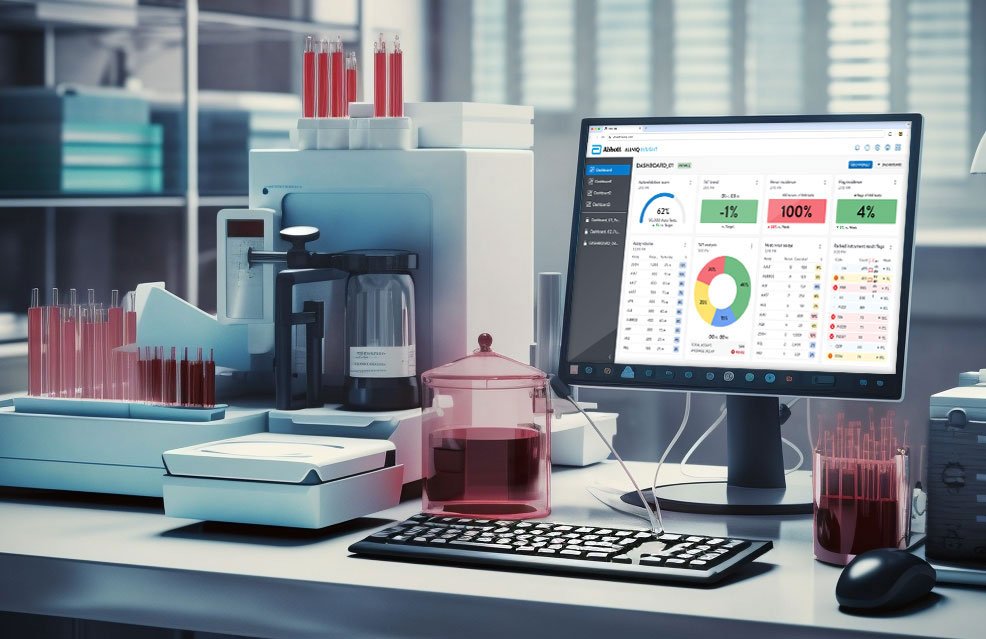
Abbott Laboratories Digital Health Solutions needed an upgrade to their laboratory middleware system and STAT! In the heat of the COVID outbreak, we were able to deliver an all-in-one platformed solution in record time.
Problem Statement
How might we help laboratory professionals improve their turn-around-times and get results to providers in a efficient and timely manner so that they can offer the best possible care to their patients?
Phase I: Research & Insights
Our team initiated the project with a comprehensive usability audit of existing 20-year-old applications, employing heuristic evaluation, user and subject matter interviews to identify friction points and to prioritize features needed. This audit revealed significant areas for improvement and identified key components needed for the design system by conducting a gap analysis.
To build on these insights, our team participated in laboratory tours to see how a typical lab functions and conducted secondary research via laboratory employee training videos, user guides, competitive research to give us an overall impression of our target users experience and to paint a clear picture of what a day-in-the-life of a medical laboratory is like.
Phase II: Design Strategy
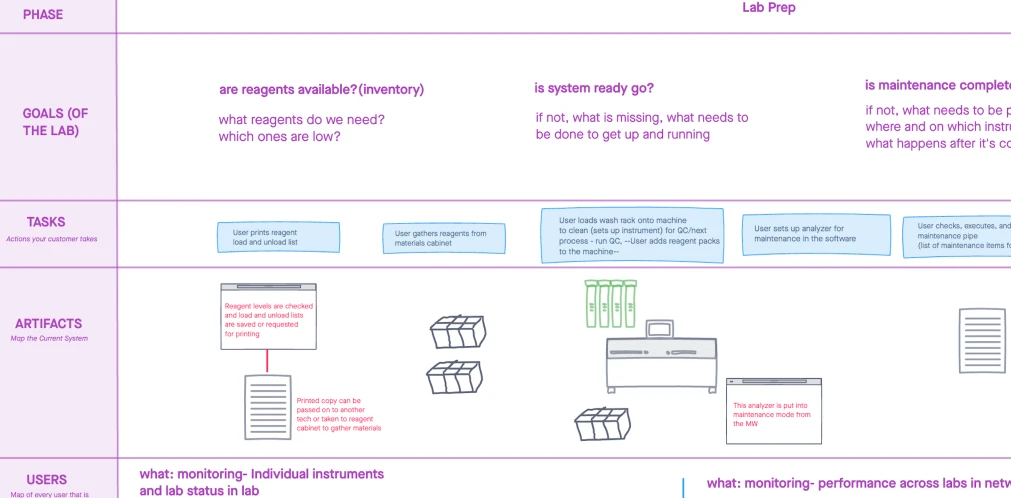
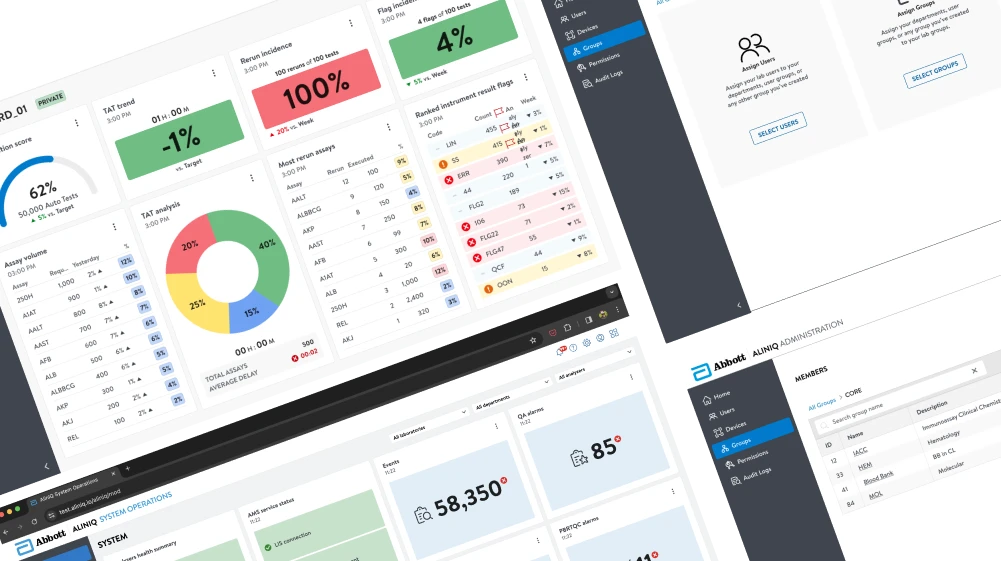
Formulated a design strategy that prioritizes a simplified user flow, enhanced data visualization specific to the needs in a laboratory. Developed a detailed design and governance roadmap for the AlinIQ DHS design system, categorizing components and guidelines, to guide the design efforts effectively.
Mapped out detailed personas and a comprehensive service design template focusing on the needs in the laboratory so as to align wireframes and designs to user needs.
Phase III: Design and Prototype Development
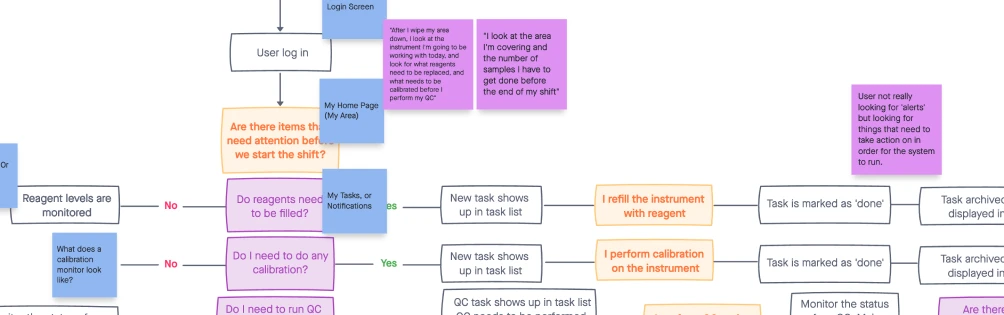
- Wireframing: Undertook the design of core app and administration screens and user flows, addressing the audit's findings. Emphasized the creation of a more intuitive and goal-oriented user journey, reducing cognitive load and enhancing the overall user experience.
- High-Fidelity Prototyping: Leveraged Figma to construct detailed prototypes that brought the new design to life. These prototypes featured a refined aesthetic that aligns with the needs of the laboratory, showcasing the app's enhanced functionality and interactivity.
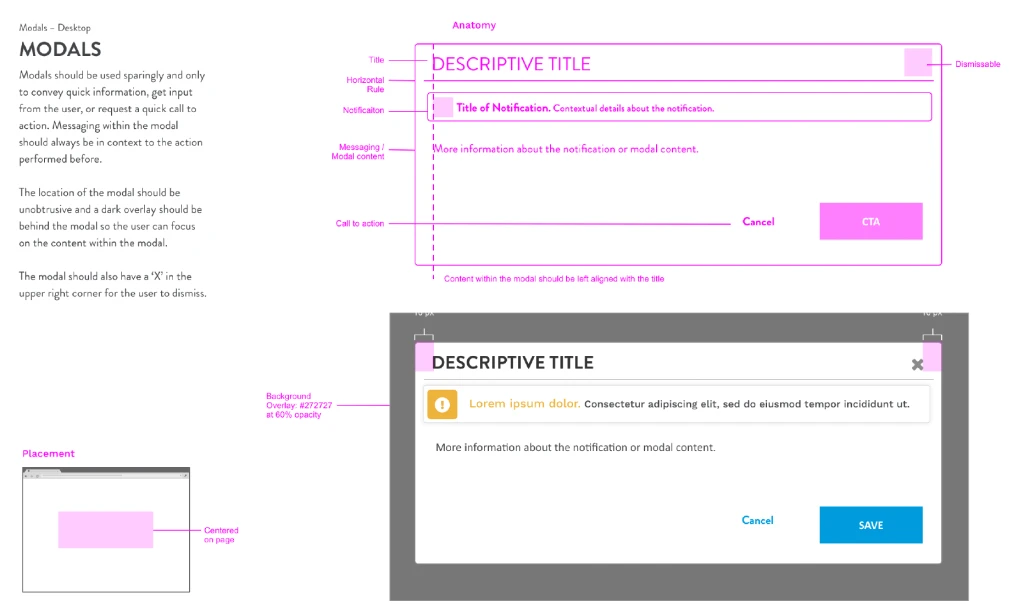
- User Interface Design: Revamped the DHS design system, incorporating Abbott branded colors and dynamic elements that motivate users to engage with their fitness goals actively. Worked with the marketing and brand teams to select specific typography and iconography, ensuring the interface is not only beautiful, adhering to business and brand guidelines, but also functional.
Phase IV: User Feedback with Key Opinion Leaders
Our team identified key opinion leaders in the industry and curated several tests to make sure that the application met their needs. Members of the team travelled to the customer sites to perform the tests and to observe the product in the environment.
Phase V: Implementation & Launch Support
Collaborated closely with the development team to ensure a smooth transition from design to implementation. Provided ongoing support and guidance during the development phase, addressing any design-related challenges that arose. Played a key role in the app's successful relaunch, monitoring user feedback and engagement post-launch to inform future updates.
Phase VI: Continual User Feedback & Improvements
Established a continuous improvement process based on user feedback and evolving healthcare and laboratory requirements, ensuring the platform remains current and effective.
Outcomes
The healthcare platform launched successfully with positive feedback from medical professionals. Key achievements include:
- 40% reduction in turn-around-times for sample results
- 95% of healthcare professionals reporting improved workflow efficiency
- 100% compliance with healthcare data security regulations